
Ox Moor House

Home Decorating for a Modern House

Category: Room-Specific Guides

  • Small Entryway Ideas: Making the First Few Feet of Your Home Count

    Here’s a slightly uncomfortable truth: most of us decorate our homes from the living room outward and never quite make it back to the front door. Which is backwards, really, because the entryway is the one space every single person experiences every single time. The best small entryway ideas aren’t about squeezing a furniture showroom into a hallway. They’re about making the first few feet of your home do three jobs at once: welcome people, absorb the daily chaos of arrivals, and set the tone for everything beyond.

    And if your “entryway” is technically just the spot where the front door swings open into the living room, stick with me. Especially then. Creating an entry where the architecture didn’t provide one is half of what this guide is about.

    First, Figure Out What Your Entryway Actually Has to Do

    Before buying anything, stand at your front door and take inventory of what actually happens there. Keys get dropped. Mail gets dumped. Shoes come off (or don’t, and track in the outside world). Coats need a landing spot. Someone checks their reflection on the way out. Packages arrive.

    Every one of those actions needs a home, or it will invent one, usually on the floor or the nearest table. The entryways that stay tidy aren’t owned by tidier people. They’re the ones where every arrival ritual has an obvious, easy place to land. Design for the behavior you actually have, not the behavior you aspire to.

    Small Entryway Ideas That Punch Above Their Weight

    Hooks Are Better Than You Remember

    A row of good wall hooks is the hardest-working piece in any small entry. It holds coats, bags, dog leashes, and tomorrow’s jacket, all in zero floor space. The upgrade move is choosing hooks that look intentional: solid brass, matte black, aged wood, whatever suits your home, mounted in a deliberate line rather than scattered. Five matching hooks read as design. Three mismatched ones read as afterthought.

    One Tray to Rule the Pocket Chaos

    Keys, sunglasses, wallet, the mail you’ll deal with later. A single tray or shallow bowl on a slim console (or a wall-mounted shelf if floor space is truly precious) catches all of it. This is the object that ends the where-are-my-keys morning ritual forever. Make it beautiful, because it’s going to be looked at more often than most of your art.

    A Mirror, for Physics and Vanity Alike

    A mirror in a small entry is doing science. It doubles the visual space, bounces whatever light exists, and gives everyone their final check on the way out the door. The bigger the better, honestly. A generously sized mirror above a slim console is the classic small-entry formula because it works: function below, light and space above.

    Seating, Even If It’s Symbolic

    Somewhere to sit while wrestling with boots transforms an entry from a corridor into a room. A small bench with storage inside is the dream, one piece handling both seating and shoe chaos. No room for a bench? A sturdy stool tucks under a console and pulls out on demand. Storage benches remain one of my favorite double-duty pieces, a theme I explored fully in Storage That’s Actually Beautiful: furniture that hides the mess while pretending it’s just there to look good.

    Get the Shoes Under Control

    Shoe sprawl is the number one killer of small entryways. Pick a container and a rule. The container: a low basket, a slim shoe cabinet, or the storage bench above. The rule: only this week’s shoes live here. Everyone’s full collection goes to closets. A basket that holds four pairs stays tidy. A corner that “holds” fourteen becomes a landslide.

    Make It Feel Like a Place, Not a Pass-Through

    Function sorted, now the feeling. The difference between an entry that works and an entry that welcomes comes down to the same layering principles I wrote about in The Art of Layering, just compressed into a few square feet.

    • A rug or runner defines the zone, absorbs grime, and adds the first hit of color and texture. Choose something genuinely washable. Entry rugs live a hard life.
    • Warm light matters enormously here. A small lamp on the console, or at minimum a warm bulb in the overhead fixture, makes every evening arrival feel like a welcome instead of an interrogation.
    • One piece of personality: a small artwork, a vase that gets fresh stems occasionally, a photo you love. One. This is a vignette, not a gallery.
    • Vertical thinking: in a truly tiny entry, everything migrates up the wall. Shelf instead of console, hooks instead of coat stand, wall-mounted everything. The floor stays clear and the space feels double its size.

    The Two Feet Outside the Door Count Too

    Here’s the part almost every entryway guide forgets: your entry starts before the door opens. The doorstep is the true first impression, and it’s usually the most neglected surface on the property.

    The checklist is short and satisfying. A proper doormat, generously sized rather than postage-stamp small. A potted plant or two that suit your light conditions and your willingness to water. A porch light with a warm bulb, cleaned of last summer’s cobwebs. And house numbers you can actually read from the street: crisp, well-mounted numbers in a finish that matches your door hardware quietly signal that someone cares about this place before anyone touches the handle. Fresh door paint or polished hardware finishes the job. Ten minutes of attention out here raises the perceived value of everything inside.

    The No-Entryway Entryway

    If your door opens straight into the living space, you build the entry with visual cues instead of walls. A runner perpendicular to the door’s swing marks the zone. A console or bench against the nearest wall gives arrivals a destination. A coat stand or wall hooks by the door corral outerwear. Even a folding screen or a strategically placed bookcase can suggest a threshold without blocking light.

    The goal is that anyone stepping inside experiences a beat of arrival, a moment where the home says “you’re here now” before revealing the rest. It’s amazing how convincingly a rug, a lamp, and a row of hooks can impersonate architecture.

    The Weekly Two-Minute Reset

    Here’s the maintenance secret nobody puts in the pretty photos: even a perfectly designed entry drifts. Coats accumulate beyond the hook count, the tray fills with expired coupons, a rogue pair of boots colonizes the corner. This isn’t failure; it’s physics. Entryways absorb the momentum of every arrival, and momentum leaves debris.

    The fix is a two-minute reset, once a week, ideally tied to something you already do, like taking out the recycling. Excess coats go back to closets, the tray gets emptied of anything that isn’t keys and sunglasses, shoes beyond the four-pair rule get walked to their real homes, and the mirror gets a quick wipe. Two minutes. The difference between an entry that stays lovely for years and one that quietly reverts to chaos is honestly just this tiny ritual, repeated.

    And if your everyday entry is through the garage or mudroom, the floor matters as much as the hooks. We compare the options in Garage and Utility Floors: Epoxy, Tiles or Paint?

    Your First-Few-Feet Action Plan

    Start with the audit: stand at your door and watch what actually happens there for two days. Then solve in order of pain. Usually that’s keys first (tray), then coats (hooks), then shoes (basket with a rule), then the feel-good layer (mirror, rug, lamp, one lovely thing). Finish with the doorstep: mat, plant, light, numbers.

    None of this requires a renovation or even a big budget. It just requires taking the first few feet of your home as seriously as the rooms they lead to. Because every good thing that happens in your home starts by walking through that door, and it deserves a proper hello.

    One last thought: the entryway is also the space where you get to decide what coming home feels like. That sounds grand for a hallway with a shoe basket, but it’s true. A warm light, a clear surface, a hook waiting for your coat. These are tiny daily kindnesses you set up once and then receive every single evening for years. Very few decorating projects offer that kind of return. Start this weekend.
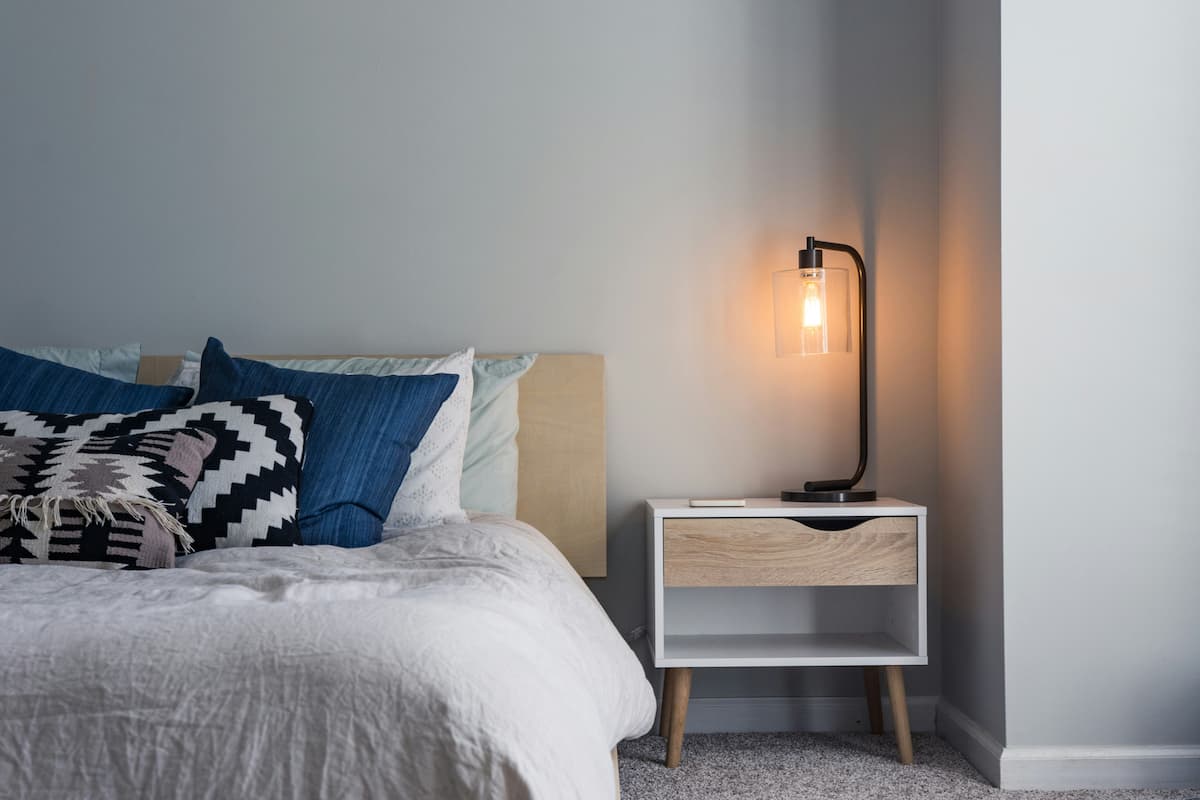
  • Bedside Table Essentials: What Actually Belongs There (And What Doesn’t)

    Here’s a confession: for years, my bedside table was a graveyard. Three water glasses in various states of evaporation, a charging cable tangled around a hair tie, two books I wasn’t reading, and a receipt from a store I couldn’t remember visiting. If any of that sounds familiar, this guide to bedside table essentials is for you, because the fix isn’t more organization. It’s fewer, better things.

    The bedside table is the last surface you see at night and the first one you see in the morning, which makes it weirdly influential for something that’s usually two feet square. Get it right and your whole bedroom feels calmer. Get it wrong and it’s a daily reminder of chaos, at exactly the moments you’re most susceptible to it.

    The True Bedside Table Essentials

    Let’s define the job first. A bedside table exists to hold what you genuinely need within arm’s reach of your bed during the hours you’re actually in it. That’s a shorter list than most of us are working with. Here’s mine, refined through years of trial and error.

    A Lamp You Can Reach Without Sitting Up

    Non-negotiable. Overhead lighting at 10pm is hostile to everything a bedroom is for. You want a lamp with a warm bulb, a shade that diffuses rather than glares, and a switch you can find in the dark with your eyes half closed. If your table is tiny, a wall-mounted or clip-on reading light frees up the entire surface, which is honestly a power move for small bedrooms.

    Water, but Make It Civilized

    The evaporating-glass graveyard ends today. A carafe with a matching glass, or a lidded cup you refill nightly, solves the hydration question with one object instead of an accumulating collection. The lid matters more than you’d think. It keeps dust out, it prevents the dreaded morning sip of stale water, and it means one glass instead of three.

    The One Book Rule

    One book. The one you’re actually reading. The aspirational stack of five is not motivating you, it’s guilting you, and it’s taking up half the table. The rest of your reading pile can live on a shelf, and if it’s beautiful enough it might even earn a spot in the living room. Some books really are worth displaying, as I argued in my roundup of coffee table books that deserve display. But your bedside table is not a library. It’s a launchpad for tonight’s chapter.

    A Small Tray or Dish

    This is the piece that does the most work. A small tray, dish, or shallow bowl catches the pocket detritus: rings, glasses, earplugs, lip balm, the random button you found. Without it, these things scatter across the surface. With it, they’re corralled into one intentional spot. The tray is the difference between “clutter” and “a vignette.” Same objects, completely different feeling.

    Something Alive or Something Scented

    One small plant, a bud vase with a single stem, or a candle you actually light. This is the piece that’s technically unnecessary and completely essential. It’s the difference between a functional surface and a corner of your home that feels considered. Keep it small. This is a supporting actor, not the lead.

    What Doesn’t Belong on Your Bedside Table

    Now the fun part. Here’s what I’ve evicted over the years, and why.

    • Your phone, ideally. I know. I KNOW. But hear me out: charging your phone across the room is the single highest-impact change on this entire list. If you’re not ready, at least get a charging setup that isn’t a loose cable snaking across the surface. A small stand keeps it tidy and slightly less tempting.
    • Mugs and food. The bedside table is not a dining surface. Yesterday’s tea mug is the gateway object. One mug becomes a mug and a plate, and suddenly you’re back to the graveyard.
    • Piles of paper. Mail, receipts, to-do lists. Paper on a bedside table is your unfinished business literally watching you sleep. It belongs at a desk or in a drawer, anywhere but the last thing you see at night.
    • The medicine cabinet’s overflow. One current necessity is fine. Seven bottles of assorted vitamins and remedies is a pharmacy display. Into the drawer they go.
    • Anything you haven’t touched in a month. The bedside table has prime real estate status. Rent is high. Evict freeloaders ruthlessly.

    The Drawer Is Where the Real Magic Happens

    If your bedside table has a drawer, you’ve been handed a gift: all the function with none of the visual noise. Hand cream, sleep masks, chargers, tissues, the remote, whatever your nighttime routine actually involves, it can all live one silent inch below the surface. A couple of small organizers inside the drawer stop it from becoming a junk drawer with a bedtime theme.

    No drawer? A small basket on a lower shelf, or even tucked beside the table, does the same job. This is the same philosophy I keep coming back to in Storage That’s Actually Beautiful: the best storage doesn’t announce itself. It just quietly makes the visible surfaces calmer.

    Styling It So It Looks Right

    Once you’re down to essentials, arrangement is simple. Vary your heights: lamp tallest, then maybe the carafe or plant, then the book, then the tray. That descending line feels natural to the eye. Odd numbers of objects read better than even ones, and three to five things total is the sweet spot for a standard table.

    Leave empty space. This is the part everyone skips. A bedside table filled edge to edge, even with lovely things, reads as cluttered. The empty space is what makes the remaining objects look chosen. It’s also, practically speaking, where you’ll set down your glasses at midnight, so it’s not really empty. It’s reserved.

    The Table Itself Matters More Than You Think

    We’ve been styling the surface, but let’s talk about the furniture for a second, because a lot of bedside chaos is really a wrong-table problem. The ideal bedside table sits at roughly the height of your mattress top, give or take a couple of inches. Too low and everything on it disappears from view and reach; too high and it looms over you like a lectern.

    Size-wise, be honest about your habits. If you’re a one-book, one-glass minimalist, a slim pedestal table or even a wall-mounted shelf is all you need, and it will make a small bedroom feel dramatically more open. If your nighttime routine involves more gear, choose a table with a drawer and a lower shelf rather than a bigger surface. More surface area doesn’t hold more things neatly. It just holds more things.

    And the two tables don’t have to match. A pair of identical nightstands reads as classic and calm, but a deliberately mismatched pair, say a small dresser on one side and a slim table on the other, often works better for couples with different storage needs. Shared height is the thing that keeps it looking intentional; keep the tops within an inch or two of each other and the eye forgives everything else.

    A Note on Guest Rooms

    Everything above applies double for guest rooms, with one twist: you’re curating for someone who didn’t pack your habits. When I put together my guide to the perfect guest bedroom, the bedside setup was doing a lot of the hospitality work: a lamp, water, a phone charger that fits more than one kind of phone, and maybe a short stack of genuinely readable books. A guest’s bedside table should answer their needs before they have to ask. That’s the whole art of hosting in one square foot.

    Start Tonight, Seriously

    The whole project takes fifteen minutes. Clear everything off, wipe the surface, and only put back what earns its place: lamp, water, one book, a tray, one beautiful thing. Everything else goes in the drawer, the recycling, or another room entirely.

    Then notice how it feels tomorrow morning when you wake up next to a calm, intentional little surface instead of a graveyard of glasses. Small change, outsized return. That’s my favorite kind of decorating math.

  • The Perfect Guest Bedroom: 7 Essential Items Every Host Needs

    The Perfect Guest Bedroom: 7 Essential Items Every Host Needs

    Let’s be honest—hosting guests can be stressful enough without wondering if you’ve forgotten something important. You want your friends and family to feel comfortable and welcome, but you don’t need to break the bank or turn your spare room into a luxury hotel suite.

    After years of hosting (and being hosted), I’ve learned that a few key items can make all the difference between a “thanks for letting me crash” visit and a “I never want to leave” experience.

    1. Fresh, Quality Bedding

    This one’s non-negotiable. Your guests will spend 6-8 hours in that bed, so invest in decent sheets and pillows. You don’t need thread counts in the thousands, but crisp, clean linens that actually fit the mattress properly will make your guests feel instantly more at home.

    2. A Bedside Light They Can Actually Reach

    Nothing’s worse than having to get up to turn off the overhead light when you’re already cozy in bed. A simple table lamp or even a clip-on reading light gives your guests control over their environment—and that’s what comfort is all about.

    3. Extra Blankets and Pillows

    People sleep differently. Some run hot, others get cold. Some need two pillows, others prefer one. Keep a few extra blankets and pillows in the closet or at the foot of the bed so your guests can customize their sleep setup without having to ask.

    4. Clear Surface Space

    Your guests need somewhere to put their phone, glasses, water bottle, and that book they’re definitely going to read before bed. A nightstand is ideal, but even a small chair or cleared dresser top works. Just make sure it’s within arm’s reach of the bed.

    5. Privacy Essentials

    Good curtains or blinds are crucial—nobody wants to wake up with the sunrise unless they choose to. If your guest room gets a lot of street light, consider blackout curtains. Your guests will thank you for the solid night’s sleep.

    6. A Few Basic Toiletries

    Keep a small basket with travel-sized toothpaste, a spare toothbrush, shampoo, and body wash. Even if your guests brought their own, having backups shows you’ve thought about their needs. It’s those little touches that make people feel truly cared for.

    7. Something to Make Them Feel Welcome

    This could be a small plant, a stack of magazines, or even just a handwritten note saying you’re glad they’re visiting. It doesn’t have to be fancy—just something that shows this space was prepared specifically for them.

    The Bottom Line

    Creating a great guest experience isn’t about having the fanciest room or the most expensive amenities. It’s about anticipating your guests’ basic needs and making them feel genuinely welcome. When someone feels comfortable and cared for in your home, that’s when the real magic of hosting happens.

    Your guests will remember how you made them feel long after they’ve forgotten what thread count your sheets were.